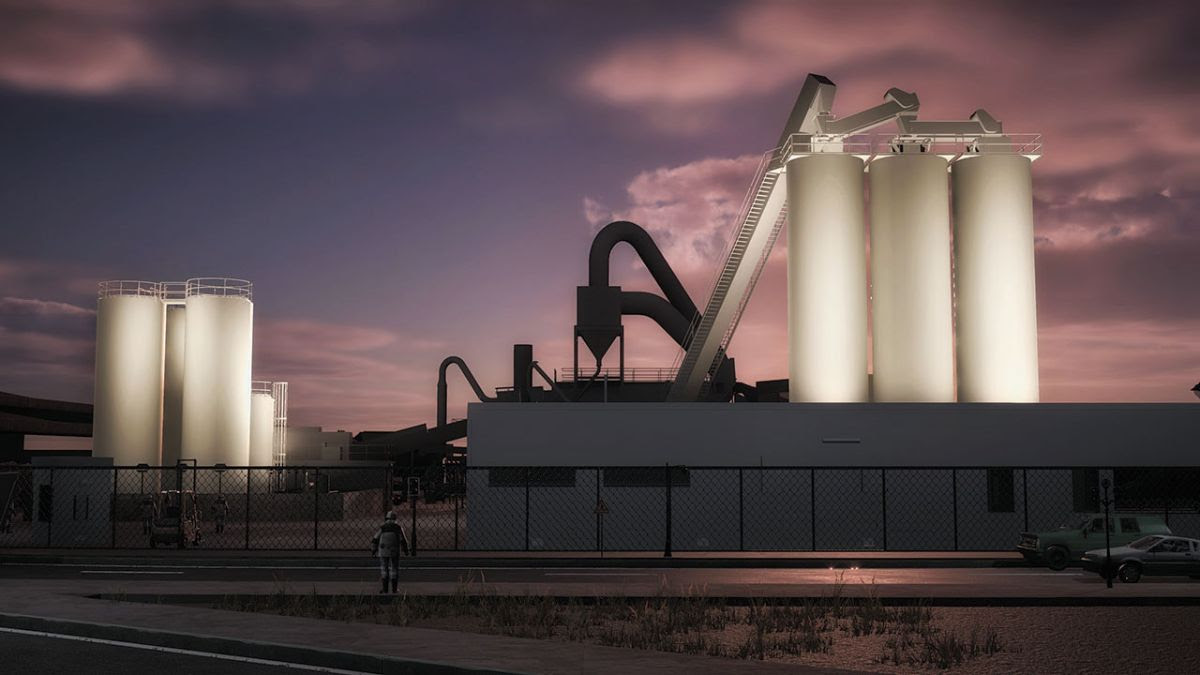
FLEXUS, by Grimanesa Amoros, was designed for the Harper’s Street Asphalt plant to illuminate the area and its surrounding community, embracing its light on all New Yorkers and its welcomed visitors. Soon, the captivating lighting sculpture will glow brightly upon Harper’s Street.
Public Design Commission President Deborah Marton said, “Today’s projects demonstrate commitment to ensuring public buildings and civic spaces welcome and serve every New Yorker!”
Harper Street Yard, 30-01 Harper Street, Queens, New York
A project of the Department of Cultural Affairs Percent for Art Program, the Department of Design and Construction, and the Department of Transportation.The NYC Department of Cultural Affairs (DCLA) is dedicated to supporting and strengthening New York City’s vibrant cultural life. DCLA works to promote and advocate for quality arts programming and to articulate the contribution made by the cultural community to the City’s vitality. For more information, visit www.nyc.gov/culture.
Kunstausstellungen – auch die der Gegenwartskunst gewidmeten – zeigen Objekte, die bereits geschaffen worden sind, also Werke der Vergangenheit sind. Die Dimension der Absenz ist durchwegs ein
blinder Passagier der musealen Praxis. Und diese Form der Abwesenheit lässt sich auch nicht mithilfe rezeptionstheoretischer Modelle habhaft werden, die auf die (vermeintliche?) präsentische Erfahrung im Rahmen einer unmittelbaren Subjekt (Betrachtet)-Objekt (Kunstwerk)-Beziehung abstellen.
In Gegenwart | Präsenz im Kunstmuseum geht es um die Zeit bzw. Zeiterfahrung, die Präsenz von Körpern/Objekten und darum wie Kunstinstitutionen – aber auch Künstler*innen – damit operieren.
GOLDEN ARRAY: Grimanesa Amorós Creates New Monumental Light Sculpture
Commissioned by The Reliance Group and Maker Maxity.
Mumbai – GOLDEN ARRAY, a large-scale, site-specific light sculpture by artist Grimanesa Amorós has opened to the public in India at JioWorld Drive, Mumbai’s premium retail district in Bandra Kurla Complex.
Amorós‘ masterpiece, GOLDEN ARRAY, was inspired by her journey through India. India’s bustling streets are synonymous with its zigzagging cable lines- a complex collection of wires powering entire cities and towns with electricity and telecommunication. Tangled, yet functional. Beyond utility, they form an integral part of the urban blueprint. This powerful imagery fascinated Amorós.
GOLDEN ARRAY adds to these many communication layers by inviting the viewer to imagine and reflect on the elaborate array that interconnects us. The piece will activate the skyline of Jio World Drive at Bandra Kurla Complex as a tribute to the buzzing city Mumbai.
Val-d’Illiez mit Steffen Körtje 21.-26.02.2021, Les Crosets (Portes du Soleil), Schweiz
Val-d’Illiez mit Steffen Körtje 21.-26.02.2021, Les Crosets (Portes du Soleil), Schweiz
20 Sept – 03 Oct 2021
IN WAVES – #womenincovid 24 Fotografinnen (mit Louisa Marie Summer) In Waves (Außenausstellung) Köpenicker Straße 70, 10179 Berlin
Die Fotoausstellung IN WAVES – #womenincovid macht dies öffentlich sichtbar – auf einer 90-Meter langen Plakatwand in der Köpenicker Straße 70 in 10179 Berlin. Vom 20.09. bis 03.10.2021 sind hier die Arbeiten von 24 Berliner Fotografinnen zu sehen. Ihre Werke liefern vielfältige Einblicke in die Lebensrealität von Frauen in der Krise.
Featuring the World Premiere of METHLUM,
a short film by GRIMANESA AMORÓS Thursday, May 20, 2021, 6:00–7:00 pm PT
The Civita Institute invites you to Save the Date for our 40th Anniversary Online Membership Events!
Don’t miss the World Premiere of METHLUM, a short film by acclaimed interdisciplinary Peruvian-American artist and Civita Institute Northeast Chapter Fellow Grimanesa Amorós. With music by the renowned Norwegian violinist Eldbjørg Hemsing. Along with the presentation, „Exploring the History and Mysteries of The Etruscan Landscape and ‚Rock-Cut‘ Environment“ by Civita Institute University of Washington Rome Center Fellow Kit Coty, a cultural historian and doctoral candidate whose research has focused on the “rock cut” culture of Italian hilltop towns.
Based in New York City and known for her large-scale light sculpture installations and videos, Grimanesa’s art conveys a sense of ephemeral wonder, entrancing viewers from different backgrounds and communities. METHLUM—an Etruscan word for geographic “district“—was inspired and created during her stay in Civita di Bagnoregio.
Art and Capital was the title of an article by Andreas Backoefer in the Spring/Summer 2020 edition of the Sluice magazine. Andreas used the subject of arts patronage in major development projects to explore different forms of capital.
short-sleeve Unisex Bella + Canvas 3001 t-shirt
Order here
Andreas Backoefer Diskurse und Institutionen zu Kunst und Design
Kontext – Material – Format
eBook
ISBN 978-3-940388-80-3
Download here
Diskurse und Institutionen zu Kunst und Design. Kontext – Material – Format bietet keine Antwort zu der häuig gestellten Frage nach dem Unterschied zwischen Kunst und Design, bzw. zu einer Klärung „Was ist Kunst?“ oder „Was ist Design?“ generell. Denn jede universelle Festschreibung in eine Richtung führt nicht zu einer Effizienzsteigerung der mit Ausstellungen befassten Systeme und Institutionen, sondern zu deren Lähmung.
Ausgangspunkt dieses Textes ist die Beobachtung, dass neben traditionellen Kunstmuseen seit dem 20. Jahrhundert auch Designmuseen entstanden sind: Die Geschichte der Diskurse zu Kunst und Design kann man mit der Entstehung dieser Museumsformen beginnen lassen. Mit dem Prozess der Institutionalisierung durch speziische Museen und der damit zusammenhängenden Kontextualisierung sind in Ausstellungsprojekten aber auch in der Literatur Abgrenzungsversuche sowie gegenseitige Dynamisierungen zu entdecken. Liam Gillick sieht diese von „many nonsynchronised moments“ gekennzeichnet. Was Kunst und Design aber gemein ist, ist die Vermutung, dass sie beide eher Schredder für vorgegebene Theorien – ein Détournement der Wissenssysteme sind. Der Wissensproduktion in beiden Disziplinen geht es jedoch darum, andere Formen des Denkens und des Wissens zu erinden – andere epistemologische Maschinen.
When Paul Valentin received the 2019 Art Prize of the Munich Academy of Fine Arts Foundation sponsored by Karl & Faber, he not only had the prize money to look forward to but also a solo exhibition in the auction house’s rooms in the heart of Munich.
The philosophical questions about the Nature of the World, about the Nothing and Truth are recurring themes in his works. They make clear the confusion these terms hold for a visual artist who is familiar with digital worlds and wants to understand the analog world to simulate it on the computer for animated films and other works.
An artist book accompanies the exhibition and was also made possible by the Karl & Faber Art Prize. Curated by Dr. Anne-Cécile Foulon in collaboration with the artist. Paul Valentin: Air into Solid
12/09/20 – 25/09/20
Mon.-Fri. 10am – 6pm
at Karl & Faber Fine Art Auctions
Amiraplatz 3, 80333 München
Extended Opening: Sat 12/09/20 12pm – 5pm
Keynote: 11 am (Restricted attendance. Please be on time. The opening speech will also be transmitted via livestream on the Instagram and YouTube channel of Karl & Faber.)
Artist Talk: Why the World does not Exist
Fri 18/09/20 6pm
Artist talk with Paul Valentin and one of the most famous contemporary philosophers Prof. Dr. Markus Gabriel. Moderated by Dr. Anne-Cécile Foulon. In German.
The exhibition is part of VARIOUS OTHERS which initiates cooperative and international art projects in galleries, artist–run spaces and museums in Munich. While serving as a content-driven forum for contemporary art that takes place each year in September, our mission is to intensify exchange and dialogue between the art scene in Munich and international partners, guests and media.
Auf Instagram zeigt Georg Gaigl in 12 Bildern in zwei Sekunden seine „two-second-flicks“ im neuen Format von minimalistischen Filmskizzen. Die handelnden Figuren sind freigestellt vor einem monochromen Hintergrund. Die Titel sind oft verfremdete Zitate wie zum Beispiel saying alive und werden auf der begleitenden Tonspur eingesprochen sowie manchmal auch im Film grafisch wiedergegeben. Die Sujets bestehen aus mehr oder weniger deutlich erkennbaren Bezügen zu aktuellen Themen der gegenwärtigen Medienlandschaft. Bei phasetrace – was formal auch eine Reminiszenz zu Georg Gaigls Zeit als Videojockey darstellt – orientiert er sich an die Bildfolgen von Eadweard Muybridge, der mit seiner Chronofotografie die Bewegungen eines galoppierenden Pferds im Bild festhielt, um sichtbar zu machen, was außerhalb der menschlichen Wahrnehmungsfähigkeit liegt. Aber vermutlich sind die flicks dem von Muybridge später entwickelten Zoopraxiskop noch ähnlicher, mit dem er die einzelnen Aufnahmen auf einer Leinwand als Bewegungsverlauf darstellte. Aber egal von welcher Seite man sich den kurzen Sequenzen annähert: man hat es hier mit einer filmischen Form des Auslassens zu tun, die Lücke wird zum Prinzip. Auf seiner Website fügt Gaigl den Untertitel „communicating the future“ hinzu. Das provoziert die Vorstellung, dass, wenn in ferner Zukunft diese Dateien ‚gelesen‘ werden, aus diesen bewusst lückenhaften Bild-Informationen variable, instabile Konstruktionen über unseren Alltag möglich sind. Vergleichbar zum großen Vorbild aller Memoria-Kunst, dem Mnemosyne Atlas des Kunsthistorikers Aby Warburg, sind diese Kürzest-Filme Teil eines kulturellen Gedächtnisses, die in einem Mix aus Bild und Ton jede Festschreibung verunmöglichen: sie sind ein spielerischer Umgang mit Auslassungen, Ähnlichkeiten und Differenzen. Mit dem kollektiven Bewusstsein und vor allem mit dem kulturellen Gedächtnis beschäftigt sich auch der portugiesische Künstler Julião Sarmento. Seine bewusst fragmentarisch gestalteten Zeichnungen sind in einer Ästhetik gehalten, die man mit den Figuren in phasetrace vergleichen kann – zum Teil gibt es nur Umrisse von Personen ohne Gesichter, die gleichzeitig verschwinden und wieder erscheinen – und wie bei Gaigl könnte es sich manchmal um ein Fragment aus einem film noir handeln. Beide – Sarmento und Gaigl – benutzen visuelle Quellen, die sich aus einer persönlichen Ikonographie sowie aus einem gemeinsamen kulturellen Gedächtnis speisen. Der neutrale monochrome Bildhintergrund der flicks wirkt wie ein Palimpsest des Ungesagten, der Abwesenheit. Georg Gaigl benutzt – nach Umberto Eco – das ‚offene Kunstwerk‘ als Drehbuch, das fordert Interpretationen und erlaubt Ambiguitäten. Das Kunstwerk ist nur ein Echo, ein Detail. Wie viele spielerisch anmutende Werke verbinden die flicks eine gewisse Attitude der Lässigkeit mit engagierter Gedankentiefe. Die Bedeutung liegt hinter einer Bilddatei.
Massimiliano Gioni, the New York-based Italian curator and contemporary art critic, serves as the Artistic Director of NYC’s New Museum, as well as the Artistic Director of the Nicola Trussardi Foundation in Milan. Hailing from Busto Arsizio, Italy, Gioni is a leading figure in the contemporary art world, having curated a multitude of celebrated exhibitions, including the 55th Venice Biennale, and authored numerous books, spanning Urs Fischer: False Friends to the definitive monograph on Paul McCarthy. While we remain largely housebound, Gioni shares with Something Curated a thought-provoking edit of reading material to discover, with a note stating, “Forgive my Italian bias, but these days my country needs all the attention and affection one can give her.” The below are his words.
The director of New York’s homegrown art fair says she is ready to make some „radical“ shifts following last year’s venue upset MARGARET CARRIGAN 26th February 2020 15:45 GMT via The Art Newspaper
“It’s always a risk for galleries, doing a fair,” says Nicole Berry. “And it comes down to the money—it’s expensive.” The director of New York’s Armory Show used to work the fair booths herself when on the staff of various Manhattan galleries, so she is well aware that it is not just the stand fees that can stretch a gallery’s budget, but also the expense of shipping and staff, not to mention the untold cost of exhaustion. “Burnout is real,” she adds.
Burnout is exactly what brought Berry to the art world. She started her career as an elementary school teacher, following in the footsteps of her mother. “I didn’t have any formal art history training, but I was always trying to incorporate it into my teaching plans,” she explains over gluten-free toast and green tea at Manhattan’s NoMad restaurant. But after six years of working in a state school, she says she needed to change. “It’s a very difficult job. There’s not a lot of support for teachers, financially or otherwise. It can be incredibly rewarding, but you’re ‘on’ all the time.”
It wasn’t just her career where she made a decisive break—around the same time she also divorced. “I thought, you know what, there’s nothing holding me back from trying something else,” she says.
Civita di Bagnoregio Palazzo Colesanti, Viterbo, Italy
The sun is an important star and has been for centuries. During my stay in Civita di Bagnoregio, I woke up early one morning and decided to explore my new surroundings. During my stroll, I was dazzled at the strength of the sun beaming on the square. It got me thinking about the town of Civita, it’s history, and it’s relation to the sun. I began researching about The Etruscan’s, who were an ancient people that founded the city, and the remnants of their civilization still linger. The name of this piece is CETHA, which was inspired by the town and its past, translating to sun in Etruscan. CETHA has red lighting with pink hues in its sequence, which represents the sunrise that burns red in the morning and streams its light throughout the town.
Grimanesa Amorós is a New York-based American interdisciplinary artist with diverse interests in the fields of social history, scientific research and critical theory. Through her art she conveys an ephemeral wonder, entrancing viewers from all different backgrounds and communities to become agents of empowerment. She makes use of sculpture, video and lighting to create works that illuminate our notions of personal identity and community. She was a guest speaker at TEDGlobal 2014, earned an NEA Visual Artist Fellowship and an NEA Artist Travel Grant, and participated in the Art In Embassies Program. Her work has been exhibited in the US, Europe, Asia and Latin America.
Grimanesa Amorós is presented in Germany by epodium Gallery.
Nichts ist eine Animations-Kurzfilm-Fabel über das Nichts.
Die fragmentarischen Szenen verbinden sich zu einem reportagenhaften Narrativ und lassen fiktive und echte Quellen zum Thema Nichts zu Wort kommen. In der Erzählung erkundet die Häsin Judy, deren Charakter dem oscarprämierten Animationsfilm „Zootopia“ (2016) entspringt, die Untiefen dieser alten Idee mit Hilfe einer Botschaft auf einem Recorder der ausseht wie eine Karotte. Der Film entfaltet die Geschichte über den Weg der WissenschaftlerInnen und DenkerInnen und legt zugleich auch eine eigene Perspektive vor. Die Faszination an dieser alten Idee „des Nichts“ ist, wie dessen Erforschung uns zeigen kann, dass wir Wahrheiten über Phänomene und Ideen erlangen können, von denen Manche sagen würden, dass es vergeblich ist auch nur darüber zu sprechen.
Von der Animation, dem virtuellen Set- und Lichtdesign, bis hin zum Charakter Rigging entstanden die geheimnisvollen Inseln in der Leere mit großer Liebe zum Detail.
Nichts (nɪçt͡s, german: nothing, emptiness) is an animated film about the history of „nothing“.
The fragmentary scenes of the fable-like narrative are presented in the form a philosophical report, which quotes different sources on the theme of the nothing.
In Nichts the anthropomorphic female hare Judy, explores this old idea of nothingness with the help of a message that she finds on a dictaphone thats shaped like a carrot. Her well-known character is from the Oscar-winning animated film „Zootopia“ from 2016. The story unfolds the the path of scientists and thinkers who have dealt with the question of what the nothing realy is and how to track it down – and also presents its very own perspective and answer.
The so-called transitory idea of „the nothing“ and how it‘s been discussed in philosophy and its exploration in phisics show us that we can attain truths about phenomena and ideas of which some would claime that it were futile to even speak about them.
Erinnerung gleicht einem Schock. Memory is like a shock.
Die Erinnerung an einen bestimmten Tag speist sich oft durch ein besonderes Ereignis, das verbunden ist mit Bildern aus Zeitungen, Nachrichtensendungen oder Online-News. Die angestoßene Erinnerung befreit Assoziationen und setzt sie zum individuellen Leben in Beziehung.Jedoch bleibt der Rückblick nicht wie eine Momentum stehen, sondern vollzieht sich als einzigartiger Prozess im Einfluss von emotionalen Erfahrungen und prägenden Erlebnissen. Die Erinnerung befindet sich stets im Fluss. Das Bild davon ist gleichsam eine oszillierend schillernde Oberfläche, die sich fortwährend ändert, unscharf wird und im nächsten Moment sich wieder aufklärt und Augenblicke der Wahrheit preis gibt.
Täglich erfolgt zu einem Newsclip eine bildliche Transformation.
Eine filmischen Information, zum Beispiel ein Newsclip, wird zu einem statischen Bild transformiert.
Durch digitale Bearbeitung und Manipulation entsteht eine Umdeutung und Verschleierung der Filmquelle. Diese kann aber über den zu jedem Bild beigefügten verlinkten QR-Code eingesehen werden.Dadurch kann beim Betrachten des Bildes ein gewonnenes ästhetisches Empfinden beträchtlich gestört und verwirrt werden, sobald der Inhalt des Videos bekannt wird.
Ebenso ermöglicht es auch einen positiven Schock, der eine besondere, vielleicht persönliche Beziehung zu dem Bild entstehen lässt.
New York City’s Office of Strategic Partnerships has established a new fund to support opportunities for young New Yorkers to connect with local arts productions and civic projects. The Civics and Arts Fund will work with cultural organizations and community groups across the five boroughs to promote civic learning, engagement, and discourse. “New York City is home to some of the world’s best art and theater, and yet it’s not accessible to all,” said Mayor Bill de Blasio. “With this initiative the city is taking steps to change that.”
The fund’s first partnership will be with Tony-nominated Broadway play What the Constitution Means to Me. Written by Heidi Schreck, who also stars in the production as herself, and directed by Oliver Butler, the play reflects on Schreck’s journey from the fifteen-year-old girl who gave speeches about the US constitution to put herself through college to adulthood and a new state of awareness about the document, which she notes does not guarantee women’s rights—it actually doesn’t even mention the word woman. The ninety-minute performance is currently being staged at the Hayes Theater on West Forty-Fourth Street through August 24.
The Whitney Museum has turned to two in-house curators to put together a show that celebrates diversity in American art—but as in 2017, the biennial is already mired in controversy
The Whitney Biennial in New York often proves a pressure cooker for US social politics, especially since the curator Elizabeth Sussman’s landmark 1993 edition directly tackled the Reagan-era Culture Wars with provocative works by women and LGBTQ artists. The last edition in 2017 was marked by protests prompted by the white artist Dana Schutz’s depiction of Emmett Till, a black teenager who was lynched in 1955. The episode remains a hot-button issue for the biennial’s organisers two years later.
Jane Panetta and Rujeko Hockley, the curators behind the 2019 edition, are perhaps unusually positioned to navigate these tricky political waters. In a departure from previous editions, where guest curators have been brought in, this year’s organisers are on staff and know first-hand the controversies that the biennial can inspire.
“We’ve tried to use the challenges and conversations that came out of the last [edition] as a productive lens for our work,” Panetta says. To that end, there is a great deal of work in the show that grapples with socio-political concerns around race and gender, financial inequality, gentrification and the vulnerability of the body.
XIII BIENAL DE LA HABANA / DETRÁS DEL MURO
The Construction of the impossible / Escenario Liquido
The 13th Havana Biennial, the largest visual arts event in Cuba, will be held from April 12 to May 12, 2019, with the commitment that the capital city of the island become a “cultural corridor” in which the creators and the public interact, announced their organizers today. Under the general theme “Construction of the Possible” the next edition of the Havana Biennial was presented as a space for those types of contemporary art that understand creation as “living event or experience in progress”.
“Detrás del Muro” is a socio-cultural project that emerged in 2012 as a special project. It is recognized for the high socio-cultural impact that its artistic intervention on the Havana Malecon has had during the 11th (2012) and 12th (2015) editions of the Biennial of Havana.
„We defend art as an opportunity to transform the way in which human beings interact in public space. That is why we have been invited by the Office of the Historian to join the celebrations for the 500th Anniversary of our beautiful capital.“
-Juan Degado Calzadilla
Fürther Nachrichten/Zeitung, 11. März 2019 Louisa Marie Summer zeigt aus dem Leben gegriffene Fotoarbeiten in der kunst galerie fürth – Starke Stimmungen im Fokus
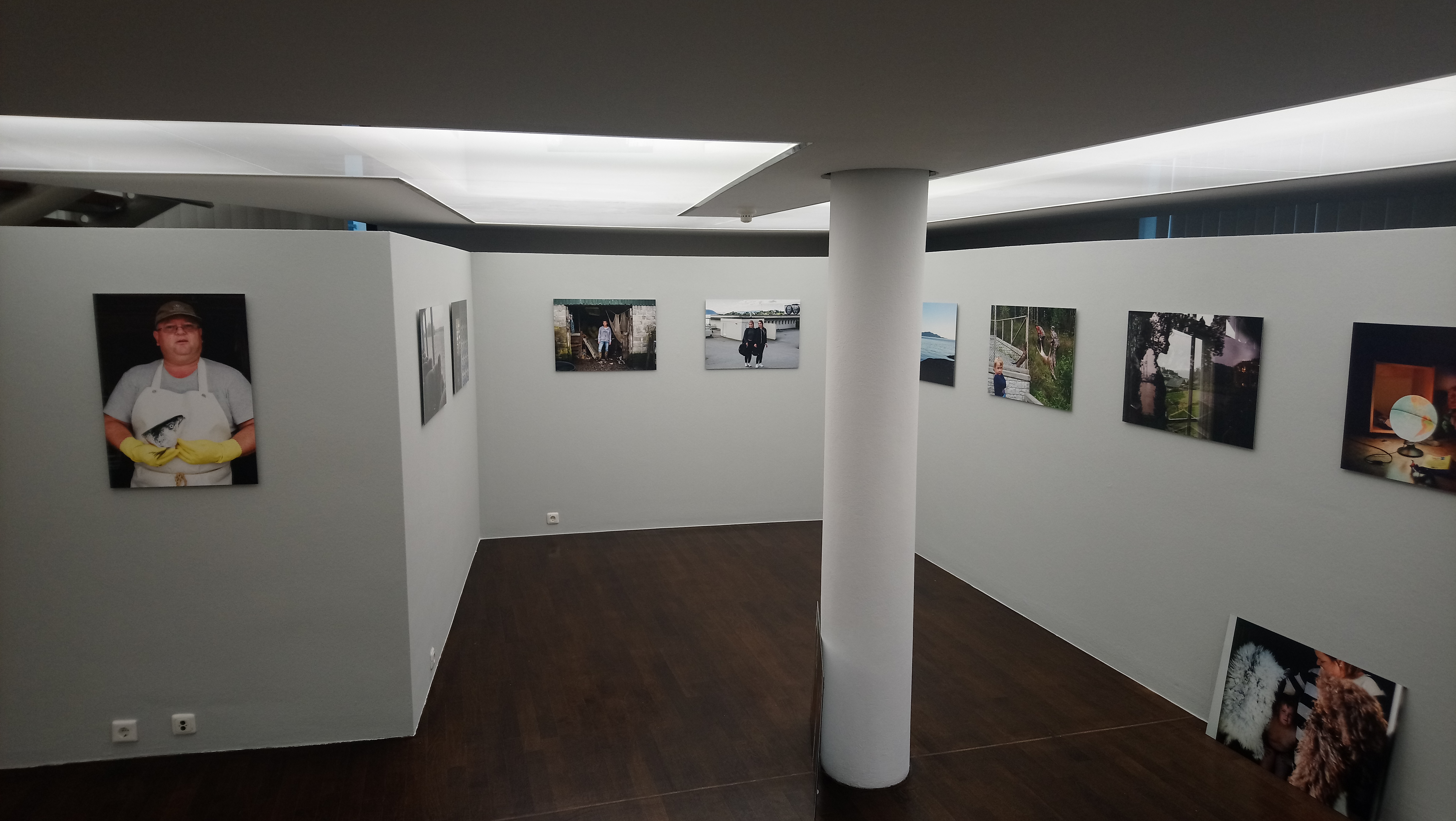
Es kommt auf den Moment an. Die Fotokünstlerin Louisa Marie Summer zeigt in der kunst galerie fürth „A Series of Life“. Ihre Arbeiten geben dem Augenblick Dauer und erzählen unendlich viele Geschichten.
Wenn deine Bilder nicht gut genug sind, dann warst du nicht nah genug dran. Robert Capa, der legendäre Fotoreporter, hat das gesagt. Louisa Marie Summer geht mit ihrer Kamera stets exakt so dicht an ihre Motive, dass es intim wird. Doch niemals überschreitet die junge Fotografin die unsichtbare Linie, die sie zum Eindringling machen würde. Die Menschen, die sie auf ihren Bildern zeigt, sind deshalb ganz bei sich. Sie nehmen – und das ist ein großer Wert – in den weitaus meisten Fällen keinen Kontakt auf mit der fremden Frau, die vor ihnen steht. Sie nehmen sie allenfalls wahr, bleiben aber ansonsten ungestört bei ihrem Tun.
Wahrscheinlich ist genau das der Grund, weshalb Summers Arbeiten so authentisch sind. Da ist zum Beispiel der Junge, der vor einem beleuchteten Globus selbstvergessen mit einer Action-Puppe spielt. Oder das Mädchen, das sich beim Warten auf die U-Bahn in sein Smartphone vertieft hat. Der Zuschnitt der Aufnahmen, das Licht, die Arrangements sind von auffallender Perfektion. Umso faszinierender bleibt die selbstverständliche Natürlichkeit, mit der die Dargestellten agieren.
The Stedelijk Museum in Amsterdam and its former director Beatrix Ruf released a statement today in which they announced that they have “agreed to leave the past” behind them. The embattled ex-leader of the institution came under fire in October 2017 after reports of conflicts of interest began circulating in the Dutch media. Journalists raised questions about the conditions of several donations made to the museum and her outside income. Ruf eventually stepped down over what she described as a “misunderstanding” in order to protect the reputation of the institution.
About the magazine
Arte Al Límite (AAL) started in 2001 with the mission of spreading Latin American art and being a window for art and a bridge between different artists and the global public.
Sign up for our epodium gallery newsletter and you will get information about our projects and exhibitions. You will also get the eBook „CAPITALIZING CAPITAL. Philanthropie – Museen – Performance“ as downloadable PDF for free.
2018 Annual Exhibition of the Academy of Fine Arts Saturday 14.07.2018 from 14h – 21h. and 15.07.2018 – 22.07.2018 14 – 21h daily
The memorial plaque in the western staircase of the foyer of the Munich Academy of Fine Arts is not what it seems to be. The artist Paul Valentin has made a replica of it and has pulled it over the original like a second skin – what’s unseen is that he had changed the original lettering like an anagram into these new words:
„COULD THEY READ IN THE SECRECY OF THE SIGNS
AND OVERCOME THE FENCES OF THEIR GARDENS
BUT THEY DON’T SEE IT
AND SO THERE INNERMOST CHRONIST MAKES A MISTAKE“
Despite its prominent place, the historical plaque, which is established 1889, is not remembered by many students or annual visitors. Especially during the summer exhibition at the academy, it is, like many other artistic positions, easily overseen in the flood of presented works. The modest sculpture plays precisely with this problem of lacking attention.
The concept „Fals-Memory“ is the turning point of the work – It describes that incorrectly stored memories (such as the false encounter of Bugs Bunny at Disneyland) can hardly be erased from ones memory, even if one anknowledges that it never happened. It may also happen that the original text of the historical plaque is permanently overwritten in the collective memory of the visitors – Both physically during the annual exhibition, as well as mentally in the memory. The Replica takes the place of the original and „covers“ it in the truest sense. According to this verdict of cognitive research, Paul Valentin therefore stages his plaque as a memorial for attention – it should be a reminder that the great works of art, the changing experiences, which resonate with us inconspicuously, pass unseen without our attention.
(oxidizing process on the replica foto: Peter Pfitzner)
“Philanthropy, Development and the Arts – Histories and Theories“
International Conference, organized by the ERC project Developing Theatre, Ludwig Maximilians University Munich, Germany
23-25 July, 2018, Carl Friedrich von Siemens-Stiftung, Munich
We welcome guests to attend the conference and/or the keynote lectures. For external guest (not the invited speakers) registration is mandatory due to the house rules of the venue. If there are guests you’d like to invite, please ask them to send an e-mail to our project assistant Gwendolin Lehnerer to register:gwendolinlehnerer@yahoo.com
WATER / SU | March 2-31 Mart, 2018 | OrjinSanat Galerisi, Orjin MASLAK İş Merkezi, Kat:-2
Açılış Kokteyli / Opening: 02.03.2018, 18:00-20:00
Space Debris’in OrjinSanat’ta başlattığı “Noise-Water-Meat” sergi serisinin ikinci serisi “Su”2-31 Mart tarihleri arasında Orjin Maslak’ta görülebilir. Artists/ Sanatçılar: Zeynep Birced, Melis Bürsin, Sırma Doruk, Christian Hansen, Seyhan Musa, Alison Luntz & Katie Nadworny, Louisa Marie Summer, Ayça Telgeren
The exhibition “Water” reflects upon the notion of the phenomenon water memory and how memory itself is formed through diverse lenses ranging from personal to collective ones, featuring digitized and manipulated versions of ourselves, and utilizing the lexicon of nature and human physique with corresponding sound elements. The qualities of water is taken as a metaphor in creation of the works displayed.
The fourth century B.C.E. Greek philosopher Aristotle compared memorizing to making impressions in wax, and the belief that memories are copies of reality that a person stores and later retrieves has been widespread. In 21st century, we trust what our ‘smart’ gadgets store for us to ‘remember’ and to be ‘remembered’. In reality, much that is remembered captures the gist rather than the details of the original experiences, and we forget remembering is often a process of reconstruction, manipulated through the neural passages of our brain.
The works included in the exhibition re-visits and re-consolidates echoic (aural) memory tandem with iconic (visual) memory as a mental process, in a playful way, suggesting the tragedy of romantic memory in relation to personal and collective spatial instances.
“What has touched us on the surface and what we recreate to recall is translated here before your eyes to experience. “
Out now:
Andreas Backoefer:
CAPITALIZING CAPITAL
Philanthropie – Museen – Performance
off epodium #9
ISBN 978-3-940388-68-1
eBook
Download here
Die drei in diesem Band versammelten Texte weisen zahlreiche Schnittmengen auf. Eine davon ist der Ort der ‚Handlung‘: thematisiert werden historische und zeitgenössische US-amerikanische Besonderheiten der Aneignung europäischer Kunst, der Kunstförderung sowie der Sammel- und Ausstellungspraxis. Des Weiteren bildet das Verhältnis von Kunst und Kapital einen roten Faden entlang der Essays. Die Tätigkeit des Sammelns als Kapitalsicherung und ästhetische Vision ist ebenfalls ein durchgehender Schwerpunkt – genauso wie die kritische Diskussion des Verhältnisses, das die verschiedenen Player (Künstler, Kuratoren, Galeristen, aber auch die Öffentlichkeit) im Feld der Kunst mit der Institution bzw. mit der institutionellen Praxis verbindet. Die drei Abhandlungen rücken diese Themen aus verschiedenen Perspektiven mit unterschiedlicher Tiefenschärfe in das Lese- und Blickfeld.
Konfigurieren Sie aus der Collection der epodium gallery Ihre persönliche Kunstsammlung (Videos/Videostills) für Ihr Fernsehgerät oder Home Entertainment System. Senden Sie Ihre Wünsche an a.backoefer@epodiumgallery.com
Performance Space 122 has a new name and renovated digs. Jenny Schlenzka, its director, envisions a “vital center for community.”
By SIOBHAN BURKE,
via The New York Times
Nomadic since 2011, Performance Space 122 has returned to its East Village home. For anyone who frequented the old PS122 — the site of rebellious experiments in dance, theater and hard-to-classify performance — the new, extensively renovated one may take some getting used to. There’s an elevator. And a lobby. And a 3,600-square-foot theater that feels larger than the two old, grittier theaters combined, with soaring ceilings, flexible seating and windows overlooking Lower Manhattan. There’s a brand-new smaller theater, too, that can double as an exhibition space.
VISITING ARTIST | GRIMANESA AMORÓS Reception: Tuesday November 14, 6 pm at Chace Center Lobby. Artist Talk: November 14, 7-9 pmMetcalf Auditorium, Chace Center/RISD Museum, 20 North Main St. Providence, RI
Grimanesa Amorós is an interdisciplinary artist with diverse interests in the fields of social history, scientific research and critical theory. Through her art she conveys an ephemeral wonder, entrancing viewers from all different backgrounds and communities to become agents of empowerment. She makes use of sculpture, video and lighting to create works that illuminate our notions of personal identity and community. She was a guest speaker at TEDGlobal 2014, earned an NEA Visual Artist Fellowship and an NEA Artist Travel Grant, and participated in the Art In Embassies Program. Her work has been exhibited in the US, Europe, Asia and Latin America. For more info, please visit the link below: https://events.risd.edu/event/grimanesa_amoros_talk_reception
In August 2015, Janine Foeller finally closed her gallery Wallspace, which she had started with Jane Hait 12 years before in Chelsea. “It was no longer sustainable,” Ms. Foeller said in a recent interview.
But she did not give up on the art world altogether. Instead, in September Ms. Foeller opened the Park Slope pop-up gallery and cafe Wifey with the artist and floral designer Simone Shubuck.
“The idea is to create a model that is more affordable and flexible and allows galleries to come and occupy a space for a designated period of time,” Ms. Foeller says. “There has to be a new way forward, and new models have to be investigated and explored because it’s just not working. We’ve seen too many of our colleagues having to close because of rent and other factors.”
The curatorial team of the Sluice Biennial (London) selected two videoworks („homo faber“ and „aerotektur“) by Roger Kausch for „Sluice Screens“ – a non-thematic programme of projected moving image artworks.
Public Opening Hours:
Sunday 1 – Tuesday 3 October 2017
12 – 6 pm
2007-2012
apprenticeships in glassdesign and glassblowing at the technical college for glass in Zwiesel
2013
glassblowing assistant at the “glass tower” Gernheim
2013-2019
studies at the Academy of Fine Arts in Munich with Prof. Peter Otto (Netherlands), Benedikt Wiertz (Brazil), Markus Karstieß (Germany) and Nicole Wermers (GB)
Findings detail the supply side of the digital sales equation, point toward hybrid models
by SARAH P. HANSON | 29 June 2017
The Art Newspaper
The size of the online market depends on the definition and price range of artworks, Tefaf's addendum report finds
The European Fine Art Fair (TEFAF) in Maastricht today (29 June) released its Art Market Report: Online Focus, a supplement to the annual Art Market Report released in March.
Her findings mostly confirm the most noticeable trends, namely that large auctioneers who have embraced their digital platforms—Heritage, Christie’s, and Sotheby’s—claim the largest share of an estimated $3.1b market (which the Hiscox Online Art Sales Report puts it at $3.75b; Art Basel’s The Art Market 2017 report, $4.9b). Pownall’s report further qualifies that of the $3.1b, fine art and antiques account for only $2.6b (the rest being other collectibles, automobiles, wine, etc).
The data is derived from “profiles of 100 companies”, 39 of which responded to a survey; a survey of more than 8,000 dealers, with a response rate of 8%; and a sample of data from 3,349 auction houses who list on Tefaf partner Invaluable. In her surveys, Pownall defined art as “objects including fine art, antiques, decorative art, collectibles, haute jewellery, photography, and design”, but the queried companies include e-tailers like Etsy and RubyLane alongside art-specific businesses.
Dealers are rethinking the bricks-and-mortar model in favour of temporary, collaborative and virtual platforms by ANNY SHAW | 13 July 2017
The Art Newspaper
For dealer Anthony Reynolds, the turning point came when the lease on his London gallery ran out and his landlord announced he was tripling the rent. “I thought to myself, I can either find another space or I can find a different way to do this,” the gallerist says.
Reynolds chose the alternative route and, after 32 years in three successive premises, closed his permanent venue in 2015. “Essentially I abandoned the tyranny of the single space,” he explains. “You have to keep funding it and filling it, and artists have to think about how to use it. What was more interesting was to think about operating a gallery as normal, but without a fixed space.”
Representing the same 20 artists as he did before he closed, for the past two years Reynolds has been staging exhibitions in other commercial galleries, including London’s Annely Juda Fine Art, Independent Régence in Brussels, and Àngels in Barcelona. There are further plans to show in Tehran and Tokyo. The aim is to develop “collaboration between galleries rather than an alternative to galleries”, Reynolds says, noting that costs and proceeds are usually split down the middle with the hosting gallery.
Norbert Heyers, born 1944 in Germany, lives in Aix-la-Chapelle and Barcelone. He studied architecture at RWTH Aachen, his firm has partnered with Sir James Stirling for Venice Biennale Project 1991. He has been exhibiting as a visual artist and photographer since 1974 in various cities in Germany, Belgium, Netherlands.
Exhibitions 2011 Carte Blanche (Aachen)
1995 Retrospektive (Kornelimünster)
1992 Rauminstallation (Aachen, Galerie Signe)
1991 Kreuze Werk 4 (Maastricht)
1990 Die anderen Zehn (Aachen, Neuer Aachener Kunstverein)
Projects
1996 EANKBUT, Fadenskulptur (Essaouira)
1995 Dynamisches Farbkonzept (Aachen, Commerzbank)
1991 Scala, Wandbild (Aachen, Ludwigforum für internationale Kunst)
Fotoveröffentlichungen für Johns Hopkins University Press (Baltimore) u.v.a.
Reducing Distance: Roger Kausch and Margarita Sanchez Urdaneta
June 2 – July 2, 2017
Opening Reception: June 2, 7-9 PM
Roger Kausch
Margarita Sanchez Urdaneta
Roger Kausch and Margarita Sánchez Urdaneta
Reducing Distance
June 2-July 2, 2017
Opening Reception: Friday, June 2, 7-9 PM
Slag Contemporary
56 Bogart St.
Brooklyn, NY 11206
T 212 967 9818
Thursday – Sunday 1-6PM
Monday – Wednesday by appointment irina@slaggallery.com www.slaggallery.com
Slag Gallery is presenting Reducing Distance, a two-person show of works by epodium artist Roger Kausch and Colombian artist Margarita Sánchez Urdaneta. This will be Kausch’s first exhibition in the United States and Urdaneta’s first exhibition at Slag Gallery.
Roger Kausch is best known for his multi-process work, often integrating music and performance — particularly in video and drawing. Reducing Distance will present a selection of Kausch’s work over the past ten years. In the media of drawing and painting, his layered yet spontaneous method leaves behind temporal marks, illustrating seismographic time traceable in layers of continual adjustment.
Manifold forms of technical processing primarily mark the origination process of Kausch’s diverse videos. The works are committed to the exertions of being human and to humanartifacts, tools and strategies, aiming to reveal the emotions, desires and hopes these are charged with. Through the fragmentation of the video stream into single image sequences, processes of movement are made to expose their hidden choreographies. The rhythm of their arrangement gives them the expressivity of music and dance.
Margarita Sanchez Urdaneta’s beguilingly mysterious works combine installation, video, sculpture, and writings. Her eerie yet strangely calming works depict places of, as she describes, “Forced disappearances, mass graves, and terror tactics.” Sánchez Urdaneta’s new 2D works are inspired by burial methods in Colombia’s perpetual complex landscape and history. The work focuses on the relationship between the landscape and the violent event, between the time of occurrence and the time of telling.
“The continuous violence in Colombia has left millions of victims and has created the necessity for a collective mourning process, a process that has been put on pause since bodies are hidden, communities are threatened if they bury their dead, and most violent acts are overlooked as soon as a new violent act is perpetrated. The interest in mourning and memorizing these violent events has become, for most grievers, not only a way of remembering but also a way of facing the present and denouncing the atrocities.”
Roger Kausch studied Art History and Philosophy at the Academy of Fine Arts in Munich. He was previously head of “Werkstatt für Bild und Tonsequenzen“, a forum for presentation and discussion of video works at the „Hochschule für Musik und Theater“ in Munich. He has exhibited and performed in galleries and concert venues throughout Germany and Austria.
Sánchez Urdaneta holds an MFA from Parsons The New School for Design (NY), a postgraduate degree in Journalism from the Universidad de Los Andes (Bogota), a BA in Visual Arts at the PUJ (Bogota), and attended the Whitney Independent Study Program (NY). Sánchez Urdaneta has participated in exhibitions at venues such as The Kitchen (NY), The EFA (NY), El Museo del Barrio (NY), Instituto Cervantes (NY), Museo de Arte Contemporaneo (Bogota), Galería Die Ecke (CL), The Arlinton Art Center (VA), and The BID Headquarters Atrium (WA).
Wir sind eine globale Vereinigung, die radikale künstlerische Inhalte unterstützen und bestärken will. Wir glauben, dass Kunst hilfreich sein kann der wachsenden Rhetorik des rechten Populismus und des Faschismus – dem stärker werdenden Ausdruck von Fremdenfeindlichkeit, Rassismus, Sexismus, Homophobie und unentschuldbarer Intoleranz – etwas entgegen zu setzen.
Wir wissen, dass Freiheit niemals vorausgesetzt werden kann, sondern gewonnen werden muss, Gerechtigkeit nicht gegeben, sondern einzufordern ist. Beides gilt es zu erkämpfen und zu beschützen und beides war in der westlichen Nachkriegsgesellschaft noch nie so zerbrechlich, noch nie so nahe daran uns zu entgleiten wie in diesem Augenblick. Als Künstler ist es unsere Aufgabe und unsere Pflicht soziale Beziehungen, die von rechtspopulistischer Herrschaft bedroht werden, zu überdenken und neu zu erfinden. Es ist unsere Verantwortung solidarisch zu sein. Wir werden nicht klein beigeben. Wir sehen uns in dieser Rolle und es ist gleichzeitig unsere Chance Menschen dazu zu bringen klar und offen über Ideen zu debattieren, indem wir die uns eigenen Ausdrucksformen und unsere öffentlichen Räume nutzen.
There is no term more ubiquitous, obnoxious, and self-serving in our current lexicon as “woke.” Woke is safety-pin politics, masturbatory symbolism, and virtue signaling of a deflated Left insulated by algorithms, filter bubbles, and browser extensions that replace pictures of Donald Trump with Pinterest recipes.
Woke is a misnomer — it’s actually asleep and myopic. Woke is a safe space for the easily distracted and defensive pop culture inbred. Woke is the Left curled up in a fetal ball scribbling think pieces about Broad City while its rights get trampled by ascendant fascism, domestically and globally.
epodium founder will give the Lecture “Jan Fabre’s The Meeting in Manhattan“ in the series Micro Talks at the biennial art expo Exchange Rates 2016 in Bushwick/Brooklyn. On Oct. 23rd, 3pm at The Buggy Factory.
Jianan Qu, born 1985 in Shandong/China, lives and works in Vienna/Linz, Austria
Jianan Qu is an interdisciplinary artist works with installations, performances, objects, video and photography. Working conceptually and minimally. He researches the boarders between visual arts and performance.
Jianan’s works have been shown at ImpulsTanz Vienna (Austria), Hong Kong Arts Festival (China), Oslo LUX (Norway), Lentos Museum Linz (Austria), euro-scene Leipzig (Germany), OK Center for Contemporary Art (Austria), Bruckner Haus (Austria), Monotonic Budapest (Hungary) the St. Pölten Festspielhaus (Austria), Atelier Salzamt (Austria) amongst others. Since 2007 Jianan Qu teaches Contemporary Dance at The Anton Bruckner University, Linz.
Jianan Qu has been awarded several different prizes, including the “Best German Dance Solo“ of Euro-Scene Leipzig 2007 and the first prize of “1. Szene Bunte Wähne Choreographie-Wettbewerb 2006” Vienna.
1968 born in Erding, Germany
1991-1993 LMU Munich
1993-1997 Academy of Fine Arts Munich
1996/97 Grant »DFJW«, Angers, France
The central themes in his pictures are the “softfacts”-the thoughts, the awareness of life.
In a surprising way he joins textures, landscapes, contemporary and historic photos of persons, houses, objects, landscapes and even words.
He has created his very own artistic technique – Décalcage.
Digital prints were attached to woodenboards by adhesive.
It’s the work done by hand that makes the décalcage a unique technique. Additionally it gives them an aesthetic presence and a painting-like structure and quality.